 Automated Archives for April, 27th 2024
This post was automatically generated
Writing Log
Trick wrote 1,855 words over 1 hr. 20 min. with an average writing speed of 23.19 words per minute.
Chess For the Day
Record: 0-0-4
Net Elo Change: -23
Games Played
Blog Posts On This Day
- 1 year ago (1 post)

Are libraries digitizing microfiche archives?
I am rewatching the Americans on Hulu and there is a scene with a character looking at microfiche of old newspapers. That set me wondering how much of library's microfiche collections had been digitized. That led me to this interesting subreddit discussion from a year ago.
OP's Question: Microfilm collection
I was wondering how libraries are dealing with their old newspaper microfilm collections. How are people persevering the information as the film breaks down? Did your library decide to replace with new copies, find a newspaper database, or digitize the collection? If you digitize was it done in-house or outsourced? Thanks
Top reply:
Microfiche/film has a bonkers long lifespan. Like, pushing 500 years. So, to answer your question, we're not. It's staying where it is because it's one of the most stable formats out there.
A reply in response to concern over acetate microfiche breaking down:
As acetate microfilm breaks down, most institutions that are committed to maintaining their collections will either use their own master reels to produce new, polyester film copies, or they'll order new, polyester film copies from their supplier. The average lifespan of polyester film is approximately 500 years (true longevity unknown, as it hasn't been 500 years since the advent of polyester film yet), and it doesn't degrade with the same volatility as acetate (no vinegar syndrome! yay!).
My workplace, where I manage our microfilm collection, is slowly digitizing on an ad hoc basis. We received funding specifically for a ribbon film scanner so that I can fulfill research requests by scanning entire reels. For legacy newspaper collections, I imagine it is more responsible to check to see what other extant copies exist, and whether they have been digitized as part of NDNP or a similar project. For cost-effectiveness, knowing what I do about the availability and integrity of existing microfilm scanners in most libraries, I imagine any digitization would have to be outsourced.
The conversation largely makes it sound like libraries are moving to digitize them for years prior to digital archiving existing, but it is not universal and relies on funding and access to equipment, etc.
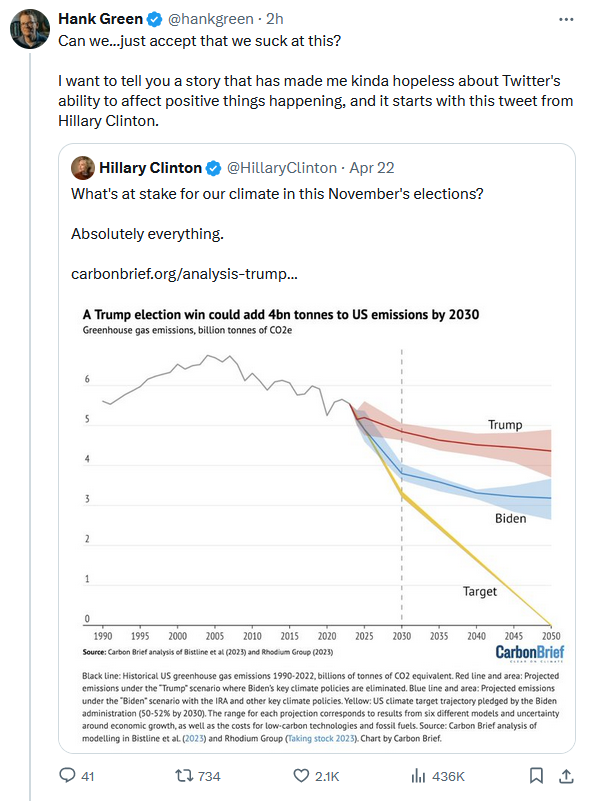
Hank Green tweets an excellent thread about CO2 emissions and the coal industry
Being sick has completely thrown off my sleeping schedule and my energy is limited. I'm about to go lay down and try to sleep again, but I just put in a solid bit of writing on a project that, aside from a little work a few days ago (which included cutting a large segment) I hadn't touched in over half a year.
But, it feels good to be writing again. Even if I am coughing and sniffling through the entire writing session.
April 26th, 2024
Automated Archives for April, 26th 2024
This post was automatically generated
Chess For the Day
Record: 4-0-5
Net Elo Change: +7
Games Played
- perspolis6666 - LOSS
- Yura64 - WIN
- anefkit - LOSS
- reinkovic - LOSS
- kinkin01 - LOSS
- scurmoredave - WIN
- Elephant25 - WIN
- alex297765 - LOSS
- dragan1957 - WIN
Blog Posts On This Day
- 1 year ago (1 post)
April 25th, 2024
Automated Archives for April, 25th 2024
This post was automatically generated
Chess For the Day
Record: 9-0-6
Net Elo Change: +13
Games Played
- Ik_chih - LOSS
- SingularityISnear - LOSS
- Dantika - WIN
- Badhonhara - WIN
- Kayence - LOSS
- sekerdoktor - WIN
- Aslanzh - WIN
- samrat1 - LOSS
- Acelocks - LOSS
- MichW89 - LOSS
- rignatov1953 - WIN
- PawnHubber96 - WIN
- CASCAJAL - WIN
- Qurashhj - WIN
- edogawa1995 - WIN
Blog Posts On This Day
- 1 year ago (1 post)
April 24th, 2024
Automated Archives for April, 24th 2024
This post was automatically generated
Chess For the Day
Record: 0-0-2
Net Elo Change: -11
Games Played
Blog Posts On This Day
- 1 year ago (5 posts)
April 23rd, 2024
Automated Archives for April, 23rd 2024
This post was automatically generated
Wallabag Additions
These are articles that which I saved today so that I may read them later. Substance and quality will vary drastically.
Chess For the Day
Record: 0-0-3
Net Elo Change: -17
Games Played
Blog Posts On This Day
- 1 year ago (2 posts)
April 22nd, 2024
Automated Archives for April, 22nd 2024
This post was automatically generated
Chess For the Day
Record: 7-0-5
Net Elo Change: +13
Games Played
- Sportik1000 - WIN
- kobis - WIN
- MagnetBarlson - LOSS
- gutinhochess - WIN
- Pernelho - WIN
- Muffin_Top - LOSS
- pepew - WIN
- gabrielette-l9020 - WIN
- shadishp - LOSS
- zagor73 - LOSS
- SpartakMoskowRUS - WIN
- mitchlldvs - LOSS
Blog Posts On This Day
- 1 year ago (1 post)
April 21st, 2024
Automated Archives for April, 21st 2024
This post was automatically generated
Chess For the Day
Record: 1-0-2
Net Elo Change: -6
Games Played
Blog Posts On This Day
- 1 year ago (4 posts)
April 20th, 2024
Automated Archives for April, 20th 2024
This post was automatically generated
Chess For the Day
Record: 3-0-7
Net Elo Change: -21
Games Played
- HeinzS - LOSS
- Bek1986Bek1986 - LOSS
- adouber11 - LOSS
- Alcore72 - WIN
- FabianMachuca - WIN
- stj007 - LOSS
- Hattermann - LOSS
- clorofilla - LOSS
- Rudyard - WIN
- sad9 - LOSS
Blog Posts On This Day
- 1 year ago (3 posts)
April 19th, 2024
Automated Archives for April, 19th 2024
This post was automatically generated
Chess For the Day
Record: 2-1-2
Net Elo Change: +6
Games Played
Blog Posts On This Day
- 1 year ago (1 post)
April 18th, 2024
Automated Archives for April, 18th 2024
This post was automatically generated
Chess For the Day
Record: 2-1-2
Net Elo Change: +2
Games Played
Blog Posts On This Day
- 1 year ago (1 post)
April 17th, 2024
Automated Archives for April, 17th 2024
This post was automatically generated
Chess For the Day
Record: 2-0-7
Net Elo Change: -30
Games Played
- Muffin_Top - LOSS
- RameshSM - LOSS
- SilentBlink - LOSS
- DinoWilliam2015 - LOSS
- mateocon21 - LOSS
- Zicko10 - LOSS
- ZG2144 - LOSS
- anca1976 - WIN
- MKuziseltr - WIN
April 16th, 2024
Automated Archives for April, 16th 2024
This post was automatically generated
Chess For the Day
Record: 2-0-1
Net Elo Change: +6
Games Played
Blog Posts On This Day
- 1 year ago (1 post)
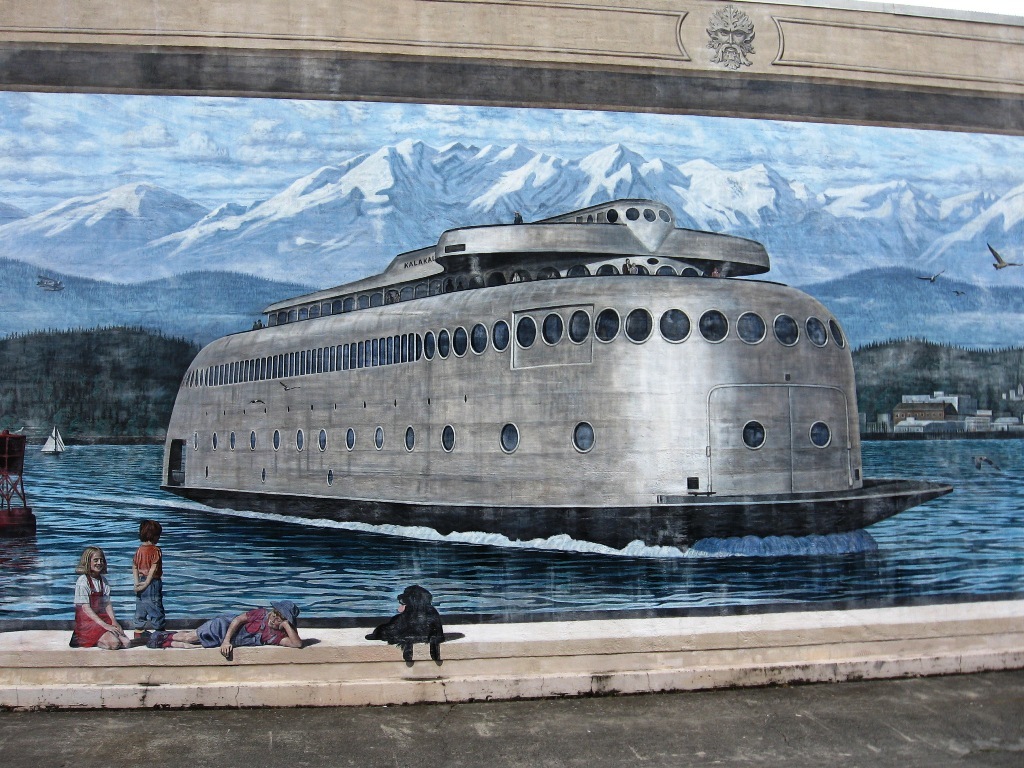
The MV Kalakala
I came across this piece of Seattle's history earlier today. Obviously well earlier than my time, but I find the design and application of art deco to a ferry ship fascinating.
From it's Wikipedia entry:
Motor Vessel Kalakala (pronounced /kəˈlɑːkəˌlɑː/)[1] was a ferry that operated on Puget Sound from 1935 until her retirement in 1967.
MV Kalakala was notable for her unique streamlined superstructure, art deco styling, and luxurious amenities. The vessel was a popular attraction for locals and tourists, and was voted second only to the Space Needle in popularity among visitors to Seattle during the 1962 Seattle World's Fair. The ship is known as the world's first streamlined vessel for her unique art deco styling.
After retiring from passenger service in 1967, the ship was beached in Kodiak, Alaska, and converted to a shrimp cannery. In 1998, the ship was refloated and towed to Puget Sound with the owner hoping to restore the ship. During this time, the ship continued to deteriorate, with the Coast Guard declaring the ship a hazard to navigation in 2011. Unable to raise the funds required for restoration, the ship was scrapped in 2015.
A raspberry pi cluster hosting websites
I always love projects like this and it definitely makes me think maybe this little blog of mine should move to a Raspberry pi cluster soon.
April 15th, 2024
Automated Archives for April, 15th 2024
This post was automatically generated
Chess For the Day
Record: 6-0-8
Net Elo Change: -10
Games Played
- i_got_scholared - LOSS
- AlexPlaymaker - WIN
- machineworks - LOSS
- ghellen - LOSS
- machineworks - WIN
- Chilledwine - LOSS
- Judleyuu - WIN
- leandro20233 - LOSS
- beerhauer - WIN
- harma1 - WIN
- zakareya-omran - LOSS
- mfrg1962 - WIN
- nitramon - LOSS
- Jordiboc - LOSS
Blog Posts On This Day
- 1 year ago (1 post)