The 'Sinners' Movie's Syllabus
Looks to be an incredible list of resources and things to further research into key areas of the movie, from Jim Crow and the Mississippi Delta, to the blues, the great migration, and more. Wow.

 |
|
"The Best Presidential Biographies"
A collection of ratings and reviews of Presidential biographies for (nearly) every US President.
From the author's about page:
Given my fascination with the presidency and love of great writing, in 2010 I began collecting the best biographies of each of the presidents. In late 2012 I embarked on a quest to read them all – beginning with George Washington.
This site was initially created to log my journey and organize my thoughts. But 260 presidential biographies later it has evolved into something a bit larger…
I finished my first pass through the presidents on Presidents’ Day 2019 – after six fascinating years. Now I’m reading presidential biographies from my follow-up list as well as great biographies of non-presidents.
Describing the rating methodology:
Ratings are on a scale of 0 to 5 stars, with equal weight given to my subjective assessment of: (1) how enjoyable the biography was to read and (2) the biography’s historical value (including comprehensive coverage and critical analysis of its subject).
|
"February 2, 2025"
Her historian nature makes this writing entirely too dispassionate and emotionless.
Billionaire Elon Musk’s team yesterday took control of the Treasury’s payment system, thus essentially gaining access to the checkbook with which the United States handles about $6 trillion annually and to all the financial information of Americans and American businesses with it. Apparently, it did not stop there.
|
The Japanese American Memorial to Patriotism During World War II
The current regime has taken down the page for this memorial, and thank goodness archive.org has it backed up.
The Japanese American Memorial to Patriotism During World War II honors Japanese Americans who lived in incarceration camps and those who served in the US military during WWII.
|

Comparing today to 1850s
Heather Cox Richardson is a historian. She writes an entry (almost) everyday, recounting the day's big news from her perspective. Today's entry is less about today's happenings, and instead takes the readers back to the 1850s.
I know people are on edge, and there is maybe one last thing I can offer before this election. Every place I stopped, worried people asked me how I have maintained a sense of hope through the past fraught years. The answer—inevitably for me, I suppose—is in our history.
If you had been alive in 1853, you would have thought the elite enslavers had become America's rulers. They were only a small minority of the U.S. population, but by controlling the Democratic Party, they had managed to take control of the Senate, the White House, and the Supreme Court. They used that power to stop the northerners who wanted the government to clear the rivers and harbors of snags, for example, or to fund public colleges for ordinary people, from getting any such legislation through Congress. But at least they could not use the government to spread their system of human enslavement across the country, because the much larger population in the North held control of the House of Representatives.
Then in 1854, with the help of Democratic president Franklin Pierce, elite enslavers pushed the Kansas-Nebraska Act through the House. That law overturned the Missouri Compromise that had kept Black enslavement out of the American West since 1820. Because the Constitution guarantees the protection of property—and enslaved Americans were considered property—the expansion of slavery into those territories would mean the new states there would become slave states. Their representatives would work together with those of the southern slave states to outvote the northern free labor advocates in Congress. Together, they would make enslavement national.
But this is not how the story turned out, she explores what happened as a reminder for his week and what it might portend.
|
"Donald Trump Is Done With Checks and Balances"
It is not an exaggeration to say that, to me, Jamelle Bouie is one of the most important voices regarding current US politics and racial division. I follow him across social media (BlueSky, TikTok, and his articles.) This is an excellent article which reminds us that Trump is a serious threat to our country because what he proposes isn't new, in fact, it's explicitly how the country was founded:
It is important to remember that the Constitution was neither written nor ratified with democracy in mind. Just the opposite: It was written to restrain — and contain — the democratic impulses of Americans shaped in the hothouse of revolutionary fervor.
"Most of the men who assembled at the Constitutional Convention in Philadelphia in 1787 were also convinced that the national government under the Articles of Confederation was too weak to counter the rising tide of democracy in the states," the historian Terry Bouton writes in "Taming Democracy: 'The People,' the Founders, and the Troubled Ending of the American Revolution."
We were not given a democratic Constitution; we made one. We unraveled the elitist and hierarchical Constitution of the founders to build something that works for us — that conforms to our expectations.
But nothing is permanent. What's made can be unmade. And at the foundation of Donald Trump's campaign is a promise to unmake our democratic Constitution.
|

 Training Ground by Martin Dugard
A few months ago I saw a video on YouTube which was examining the inherent geographical advantages that the USA has. And, from what it covered, it talked about how much of what was once Mexico's most arable and verdant land was lost to the US during the Mexican-American war.
Now, I know about the war in the very broad strokes, but I didn't really have a strong sense of it. So, I went looking for some books to read on the topic and eventually landed on Training Ground by Dugard, as I thought the framing of the war as also a place that many of the notable names from the Civil War was interesting.
Here's the blurb on Amazon:
For four years during the Civil War, Generals Grant and Lee clashed as bitter enemies in a war that bloodied and scorched the American landscape. Yet in an earlier time, they had worn the same uniform and fought together.
In The Training Ground, acclaimed historian Martin Dugard presents the saga of how, two decades before the Civil War, a group of West Point graduates—including Robert E. Lee, Ulysses S. Grant, Jefferson Davis, Stonewall Jackson, and William Tecumseh Sherman—fought together as brothers. Drawing on a range of primary sources and original research, Dugard paints a gripping narrative of the Mexican War, which eventually almost doubled the size of the United States.
The Training Ground vividly takes us into the thick brush of Palo Alto, where a musket ball narrowly misses Grant but kills a soldier standing near him; through the mountains and ravines of Cerro Gordo, as Lee searches frantically for a secret route into the Mexican army's seemingly invincible position; to Monterrey, as future enemies Davis and Grant ride together into battle; down the California coast, where war-hungry Sherman seeks blood and vengeance. And we are there as the young troops mount the final heroic—and deadly—assault on Mexico City.
So, for the past few weeks I've been working through it. The truth is, I am not a big war history buff and I found the book hard to get through for that reason. It's not just four biographies, it is an overview of the war which zooms in on portions relating to the four of them, but still maintaining the overall narrative of the war. Today, on my flight to Las Vegas for work, I finally finished it.

(The above is from Wikipedia, not the book. Including it for the reader's benefit.)
Overall, if you're like me and wanting to learn about the Mexican-American war, or its connections to the Civil War, I recommend this book. But I don't think I recommend it as a general book for most people.
I did export the segments I highlighted from the book, and will share them here as well as giving some small notes after each:
"They may shout and hurrah, and dance around the bonfires that will be lighted, the cannon that will roar in honor of some field of human butchery; but to what end? Is not life miserable enough, comes not death soon enough, without resort to the hideous energy of war? People of the United States! Your rulers are precipitating you into a fathomless abyss of crime and calamity! Why sleep you thoughtless on its verge, as though this was not your business, or murder could be hid from the sight of God by a few flimsy rags called banners? Awake and arrest the work of butchery ere it shall be too late to preserve your souls from the guilt of wholesale slaughter! Hold meetings! Speak out! Act!"
This comes from a segment which described the anti-war efforts against this war. I found the verbiage and tone very interesting to see, with some echoings to today.
"Live your life that the fear of death can never enter your heart," said Tecumseh.
One thing the book highlights is that some names I know historical figures by were modified because of their enrollment in West Point. "William" Tecumseh Sherman was not born William. It was added to his name by his father when he was submitted for admittance to West Point.
Ulysses S. Grant had no S. initial until he arrived at the school due to some clerical error. And because his name would be listed as U. S. Grant, he got nicknamed (Uncle) Sam Grant, which he chose to just go by and not fight.
But, I found this quote from Sherman interesting, while not revolutionary to hear in this modern era it speaks a great deal to his mindset and that which became evident in the Civil War.
The result was an appalling number of deaths. Unmarked graves soon lined the San Juan. Regimental bands so often played a death march for funerals that Camargo's mockingbirds learned to mimic the refrain.
I found this just so dark. Again, I've heard this concept before of birds learning songs from humans, but under the framing of this war it struck me enough that I highlighted it while reading.
President Polk's Democratic Party had a long-standing distrust of the armed forces, believing that the nation had little need for a standing army. Volunteers like Davis were his ideal soldiers. "It has never been our policy to maintain large standing armies in time of peace," Polk had declared before the war began. "They are contrary to the genius of our free institutions, would impose heavy burdens on the people and be dangerous to public liberty. Our reliance for protection and defense on the land must be mainly on our citizen soldiers, who will be ever ready, as they have been ever ready in times past, to rush with alacrity, at the call of their country, to her defense."
Oh how far this country has come, and learned. The book points out that the Mexican-American war was basically the first war for the US after the war of 1812. And it jumped out to me how different the political landscape was where they questioned even needing a standing army at all. Obviously, Polk here is meaning that the country would rely more on the militias, rather than the standing army. It's like saying that cities shouldn't have paid fire departments and should rely entirely on volunteer fire departments. Or, I suppose, perhaps it is even more about state vs national in the structure, but, regardless - the correct decision won out.
Polk's greatest dilemma over Taylor's armistice, however, lay not with the opinions of the British or the French, and certainly not with that of the Mexicans. It was the American people whom he feared most. The problem had its roots in democracy and a politician's need to be elected by the people before being allowed to serve. Americans had historically been an easily malleable, highly illiterate, and ill-informed mass of voters. But that was changing, and quickly. Technological advances in papermaking and the invention of the steam printing press (which printed well over 1,000 pages per hour, as opposed to the 240 of the Gutenberg-style manual press) had made newspapers affordable and more easily mass-produced beginning in the 1830s. Once only for the well-off, papers sprang up all around the country; New York alone had eleven dailies, a quick source of news and opinion available for as little as a penny a day.
Another interesting insight outside of the war; that the changing face of the populace thanks to the industrial revolution's innovation of the printing press threatened to interfere with the politics behind and around the war. Another echoing moment for today and the land of social media, etc. Obviously the question around algorithms etc., is inherently different at a base level, but still, I see interesting parallels still today - 200 years later.
Scott's invasion of Veracruz was the largest-ever landing of American troops on foreign soil and would not be surpassed until June 6, 1944 — D-day.
This passage jumped out at me. It lasted nearly 100 years.
Grant's job during the three-month delay in Puebla was to ride out with empty wagons and purchase produce and goods from local farmers. As a result, he often returned looking dirty and unkempt, his uniform unbuttoned for comfort. The date has been lost to history, but sometime during this period, Lee paid a visit to Garland's command and remonstrated Grant for his lack of spit and polish. It was the first time the two men ever met, and the wording was harsh enough that Grant would remember it for the rest of his life — and would remind Lee of it again when next they met on a Palm Sunday far in the future.
A bit poetic here.
By 4:00 a.m., Mexico City's authorities had sent a delegation to Scott, requesting terms of surrender. As the sun rose over the capital the following morning, the American flag was raised over Mexico's National Palace. Scott slept there that night, guarded by a squad of U.S. Marines, in what was also known as the Halls of Montezuma.
It's one of the few lines I know from the Marine Corp. anthem, and I had forgotten it was a direct reference to the Mexican-American war.
Homesick for Julia and their growing family, he abruptly resigned his commission in 1854 and returned home. Rumors that drunkenness was the cause have been greatly exaggerated, as Grant was known for his inability to drink more than a few sips of alcohol owing to his light weight and diminutive size. He struggled to find a new profession and soon failed at a number of business ventures that included farming, tanning, and bill collecting. When the Civil War began, Grant was commissioned as a colonel in the Illinois militia. Within three years he had risen to become general-in-chief of all U.S. armies. Following the war, he returned to civilian life. Grant successfully ran for president in 1868 and served two terms. He died on July 23, 1885, shortly after completing his memoirs, which were edited by Mark Twain.
The Epilogue gave a post-war summation of each of Grant, Lee, Sherman and Davis; this passage from Grant was interesting to me. I had forgotten that Mark Twain edited Grant's autobiography, and also I didn't know about his non-war life and how he had attempted a few businesses before being called back to war and rising through the ranks to Commander-in-Chief.
And that's it. As I said, overall I enjoyed the book and it accomplished what I set out to do, but it didn't floor me such that I am going to urge everyone to read it.
|
Logistics Win Wars
I continue to slowly make my way through a book about the Mexican-American war, and looking at how it was so impactful on the American Civil war. It shares the stories of Robert E. Lee, Ulysses Grant, Tecumseh Sherman, Jefferson Davis, and a few others, by sharing their stories from the Mexican-American war. It's a very interesting look at what was the first war fought by the US Military other than England, or the native tribes, etc.
One thing that really struck me is that both Lee and Grant held logistics roles during their time serving in the Mexican-American war. Lee was the Inspector General for the unit under one of the Generals, and Grant was quartermaster.
I'm far from a war historian, but it's no secret that wars are won and lost largely due to their ability to fund, fuel, and feed their armies. And to have the two main Generals from the Civil War shown in such clear comparison, knowing what comes in their future just is very interesting to me.
As for the book, we've reached the point where I am speed skimming rather than forcing myself to read in-depth. The reality is, I don't want to know the details of the urban warfare as the US Military took control of Monterrey, etc. So I'm hoping to finish the book soon so I can move on to something new.
|
"July 21, 2024"
Heather Cox-Richardson is a modern day historian and this is her entry regarding Joe Biden stepping down.
My Fellow Americans,
Over the past three and a half years, we have made great progress as a Nation.
Today, America has the strongest economy in the world. We've made historic investments in rebuilding our Nation, in lowering prescription drug costs for seniors, and in expanding affordable health care to a record number of Americans. We've provided critically needed care to a million veterans exposed to toxic substances. Passed the first gun safety law in 30 years.
Appointed the first African American woman to the Supreme Court. And passed the most significant climate legislation in the history of the world. America has never been better positioned to lead than we are today.
I know none of this could have been done without you, the American people. Together, we overcame a once in a century pandemic and the worst economic crisis since the Great Depression. We've protected and preserved our Democracy. And we've revitalized and strengthened our alliances around the world.
It has been the greatest honor of my life to serve as your President. And while it has been my intention to seek reelection, I believe it is in the best interest of my party and the country for me to stand down and to focus solely on fulfilling my duties as President for the remainder of my term.
I will speak to the Nation later this week in more detail about my decision.
For now, let me express my deepest gratitude to all those who have worked so hard to see me reelected. I want to thank Vice President Kamala Harris for being an extraordinary partner in all this work. And let me express my heartfelt appreciation to the American people for the faith and trust you have placed in me.
I believe today what I always have: that there is nothing America can't do—when we do it together. We just have to remember we are the United States of America.
With this letter, posted on X this afternoon, President Joe Biden announced he would not accept the Democratic nomination for president. So ended the storyline begun after the event on June 27, when Biden appeared unable to respond effectively to Trump's verbal assaults. Since then, there has been a drumbeat of media stories and some demands from Democratic lawmakers and donors calling for Biden to step aside and refuse to run for a second term. Increasingly, that drumbeat imperiled his reelection, opening the way for Trump's election to install a dictatorship of Christian nationalism.
In another post shortly after the first, Biden endorsed Vice President Kamala Harris for the presidential nomination, writing: "My fellow Democrats, I have decided not to accept the nomination and to focus all my energies on my duties as President for the remainder of my term. My very first decision as the party nominee in 2020 was to pick Kamala Harris as my Vice President. And it's been the best decision I've made. Today I want to offer my full support and endorsement for Kamala to be the nominee of our party this year. Democrats—it's time to come together and beat Trump. Let's do this."
Harris smoothly took the baton. "On behalf of the American people, I thank Joe Biden for his extraordinary leadership as President of the United States and for his decades of service to our country," she wrote. "His remarkable legacy of accomplishment is unmatched in modern American history, surpassing the legacy of many Presidents who have served two terms in office.
|
Inflation during the US Civil War
I am currently reading The Shortest History of Economics by Andrew Leigh. During its section about the Industrial Revolution, it touches on the industrialization of war by discussing the US Civil War. I found the below passage fascinating as the inflation during the war was not something I'd ever heard about before.
During the course of the Civil War, the South funded 60 percent of its costs through inflation (compared with 13 percent for the north). By the end of the war, the South was printing so much money that goods cost ninety-two times as much as they had done when the conflict began.
|
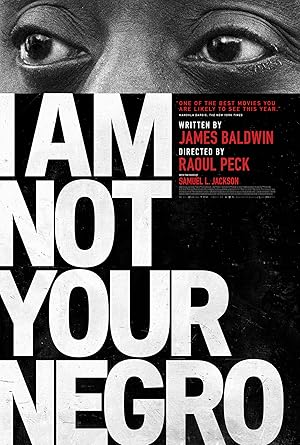
 I Am Not Your Negro (2016) - 5 out of 5 stars
James Baldwin: The story of the Negro in America is the story of America, and it is not a pretty story.
Here is a description of the movie, written by Jwelch5742 on IMDB:
In 1979, James Baldwin wrote a letter to his literary agent describing his next project, "Remember This House." The book was to be a revolutionary, personal account of the lives and assassinations of three of his close friends: Medgar Evers, Malcolm X and Martin Luther King, Jr. At the time of Baldwin's death in 1987, he left behind only 30 completed pages of this manuscript. Filmmaker Raoul Peck envisions the book James Baldwin never finished.
I admit struggling to find words for this film, as it is so important to tell stories which I have zero direct experience with. But it is a reminder that a movie which came out seven years ago about an intellectual who died almost forty years ago, and discusses the lives of three great men who died longer ago than that - is still timely and important today.
James Baldwin: Not everything that is faced can be changed. But nothing can be changed until it has been faced. History is not the past. It is the present. We carry our history with us. We are our history. If we pretend otherwise, we literally are criminals.
 |
|
"Hiroshima's Anniversary Marks an Injustice Done to Blast Survivors"
I told Katie yesterday, I have a hard time getting excited to go see a movie about Oppenheimer. I don't laud the creation of the nuclear bomb. And I think hero worship of that sort is problematic. Especially considering it in light of today, a day where so many people were killed and so many more had their lives changed forever.
On August 6, 1945, the U.S. used an atomic bomb for the first time in history, against the city of Hiroshima. The U.S. dropped another atomic bomb on Nagasaki three days later. Experts estimate that the two bombs instantly killed more than 100,000 people.
But an equally disturbing and important story should not be forgotten—the fate of the more than 500,000 hibakusha, those Japanese civilians who survived the nuclear bombing of the cities of Hiroshima and Nagasaki.
American leaders wanted information about the human cost of fighting what many thought was an inevitable nuclear war against the Soviet Union. Japanese survivors of nuclear bomb attacks were drafted for study with no informed consent and no discussion of the risks of radiation. Within six weeks of the bombings, U.S. and Japanese expert teams were in both cities studying the biological impact of radiation while saying nothing about their suppositions of its dangers. The survivors’ enrollment began just as the victorious Allies concluded Nuremburg trials of Nazi doctors and scientists, which ended with convictions for atrocities including treating unwilling people as guinea pigs.
|
Trinity Downwinders - People who were affected by the Trinity test for the nuclear bomb
A Reddit post (of screenshots from Twitter) discussed the people who were forced to move, with less than 24 hours notice, to avoid the test of the Trinity bomb. The linked site is the group waiting for some sort of compensation from the US government due to lost lands, and that many of them dealt with radiation fallout.
|
TIL: Rhode Island changed its name in 2020
Even many Americans don't realize that Rhode, Island, the smallest US state by area, actually had a longer official name until last year: State of Rhode Island and Providence Plantations.
But in a referendum on Nov. 3, the same day as the 2020 US presidential election, the state's voters chose to amend the state constitution and shorten the name to just "State of Rhode Island".
|
Dan Rather discusses Florida's 'Stop WOKE Act'
Dan Rather discusses Florida's horrible decision to sanitize the nightmares that was America's history regarding slavery:
As much as we wish American history were different, tragedy is part of our reality. We do a grave disservice to future generations if we sanitize the truth. People can behave horribly. Societies that profess noble values can countenance violent bigotry. We can either look back from whence we have come with clarity, or we can try to muddy the roots of the present and weaken ourselves in the process.
This week, the Florida State Board of Education reworked its standards for teaching Black history. The changes come in response to the state’s so-called “Stop W.O.K.E. Act.” Passed last year, it limits training and education around issues of race, sex, and other criteria for systemic injustice. At its heart is a core belief that has animated right-wing culture warriors: that people alive today should not be made to feel bad or even uncomfortable by the sins of the past. The thinking goes, that was a long time ago.
But of course it really wasn’t. And the legacies of the past live on. And if we don’t learn from history, we are bound to repeat it.
George Takei also had a thought regarding this stupidity:
|
A historical map of Sundown Towns in the US
Interesting to see the historical markers and upsetting to see so many of them across the map. An important bit of context is that the person who originally shared this online was pointing out there are still plenty of places in this country which are sundown towns and that they are not limited to the South. The link goes to the Twitter thread with more good links for further reading.
Going back to the map, Seattle here is historically a sundown town for Asians and Indigenous People, the site gives this historical context:
When Seattle incorporated in 1865, the city banned American Indians from living there, except as live-in domestic workers. When the city was reincorporated in 1869, the legal ban was lifted, and it may not have been effectively enforced, 1865-69. American Indians were still frequently harrassed [sic], however, and subject to segregation.
In the 1880s, white Seattle residents attempted to expel the city’s Chinese population. “A vigilante gang of whites marched on Chinatown one morning and at gunpoint gathered the Asian residents, herding them down to the train station. There the Asians were loaded onto freight cars and shipped off to Tacoma. Some eventually (and quietly) returned but most apparently did not…
"On February 7, 1886, a throng of workers rounded up virtually every Chinese in Seattle and herded them to the Ocean Dock at the foot of Main Street for passage out of town on a waiting steamer. The mob and its frightened charges were met at the pier by police and a contingent of the volunteer Home Guard. A stalemate ensued when territorial governor Watson Squire prevented the ship from leaving." Thus Seattle never quite became a sundown town vis-a-vis Chinese, at least not for longer than a few days. Many Seattle neighborhoods kept out African Americans, by tradition and force, and also by restrictive covenants, but as an entity, Seattle never prohibited blacks from living within the city limits.
I think this is perhaps even kind to Seattle. It has a very racist history which only broke from core institutional issues in the last fifty-sixty years.
As of the 2022 Census the demographics for King County (which I'll come back to my county's name in a moment):
| Race and Hispanic Origin | % |
|---|---|
| White alone | 63.5% |
| Black or African American | 7.4% |
| American Indian and Alaska Native | 1.0% |
| Asian | 21.7% |
| Native Hawaiian and Other Pacific Islander | 0.9% |
| Two or more races | 5.6% |
| Hispanic or Latino | 10.5% |
| White alone, not Hispanic or Latino | 55.% |
For comparison: I grew up in Orange County, Florida. Their census shows: 20% (+13%) Black or African American, 33% (+22.5%) Hispanic or Latino people, but less than 6% (-15.7%) Asian people.
Now, switching to King County, Washington and it's history.
King County was created prior to Washington becoming a state, and it was originally named after Vice President William R. King, who served under Pierce. In 1986 the county's council approved an effort to rename the namesake of the county to be for Martin Luther King Jr. because one of these people fought racism, and the other was a slave owner. I'll leave it as an exercise to the reader to guess which is which.
Fascinatingly the county did not have the power to make this name change, it has to be done by the state. So it wasn't until 2005 that the governor signed a bill which made this namesake change official.
The last topic I'll touch on this discussion as I make sure to shine light on the Seattle history, is a look at its racially restrictive covenants which limited property ownership by minorities.
From the link, a page from UW:
The language of segregation still haunts Seattle and cities and towns throughout Washington State. It lurks in the deeds of more than 30,000 homeowners in King County and at least 20,000 more in other counties. Look deep in the fine print. Many Queen Anne residents have this clause in their deeds: "No person or persons of Asiatic, African or Negro blood, lineage, or extraction shall be permitted to occupy a portion of said property."
Racial deed restrictions became common in the decades between 1910 and 1960. For most of that time, the restrictions were an enforceable contract and an owner who violated them risked forfeiting the property. Many neighborhoods prohibited the sale or rental of property to Asian Americans and Jews as well as Blacks. In 1968, Congress passed the Fair Housing Act, finally declaring it unlawful to discriminate on the basis of race or ethnicity in the sale or rental of housing. Although decades have passed since 1968, the shadow of these racist restrictions remains, shaping the demography of some neighborhoods, constraining access to homeownership for thousands of families who experienced generations of exclusion.
These exclusions were hardly unique to Seattle, but it is notable how it was only declared unlawful less than 70 years ago.
|
A shorth thread about York, the sole black slave in the Lewis & Clark expedition
Everyone knows Lewis & Clark, but did you know that there was a black man who was also part of the expedition?
As he was enslaved by William Clark, he participated as a full member of the expedition & was present when the expedition reached the Pacific Ocean.
|
George Washington's Inauguration Address
On April 16, 1789, George Washington was inaugurated as the first President of the United States. Below is his first address to Congress. It's dense and a bit hard read, but I found it quite interesting to see what he had to say at that moment in history. That said, despite the density of what is said, you'll find it's light on actual substance.
Given the density and difficulty to read, I'm adding somewhat tongue-in-cheek 'tldr's after each paragraph for your convenience in reading. These are based on how I parse what is said, and I am far from a genius, so take them with a grain of salt.

Fellow-Citizens of the Senate and of the House of Representatives:
Among the vicissitudes incident to life no event could have filled me with greater anxieties than that of which the notification was transmitted by your order, and received on the 14th day of the present month. On the one hand, I was summoned by my Country, whose voice I can never hear but with veneration and love, from a retreat which I had chosen with the fondest predilection, and, in my flattering hopes, with an immutable decision, as the asylum of my declining years--a retreat which was rendered every day more necessary as well as more dear to me by the addition of habit to inclination, and of frequent interruptions in my health to the gradual waste committed on it by time. On the other hand, the magnitude and difficulty of the trust to which the voice of my country called me, being sufficient to awaken in the wisest and most experienced of her citizens a distrustful scrutiny into his qualifications, could not but overwhelm with despondence one who (inheriting inferior endowments from nature and unpracticed in the duties of civil administration) ought to be peculiarly conscious of his own deficiencies. In this conflict of emotions all I dare aver is that it has been my faithful study to collect my duty from a just appreciation of every circumstance by which it might be affected. All I dare hope is that if, in executing this task, I have been too much swayed by a grateful remembrance of former instances, or by an affectionate sensibility to this transcendent proof of the confidence of my fellow-citizens, and have thence too little consulted my incapacity as well as disinclination for the weighty and untried cares before me, my error will be palliated by the motives which mislead me, and its consequences be judged by my country with some share of the partiality in which they originated.
tldr: I hadn't planned to do this, I was ready to retire and let age take me on my estate. But you all call me to this role and out of duty I will accept, though I am not sure I am qualified.
Such being the impressions under which I have, in obedience to the public summons, repaired to the present station, it would be peculiarly improper to omit in this first official act my fervent supplications to that Almighty Being who rules over the universe, who presides in the councils of nations, and whose providential aids can supply every human defect, that His benediction may consecrate to the liberties and happiness of the people of the United States a Government instituted by themselves for these essential purposes, and may enable every instrument employed in its administration to execute with success the functions allotted to his charge. In tendering this homage to the Great Author of every public and private good, I assure myself that it expresses your sentiments not less than my own, nor those of my fellow- citizens at large less than either. No people can be bound to acknowledge and adore the Invisible Hand which conducts the affairs of men more than those of the United States. Every step by which they have advanced to the character of an independent nation seems to have been distinguished by some token of providential agency; and in the important revolution just accomplished in the system of their united government the tranquil deliberations and voluntary consent of so many distinct communities from which the event has resulted can not be compared with the means by which most governments have been established without some return of pious gratitude, along with an humble anticipation of the future blessings which the past seem to presage. These reflections, arising out of the present crisis, have forced themselves too strongly on my mind to be suppressed. You will join with me, I trust, in thinking that there are none under the influence of which the proceedings of a new and free government can more auspiciously commence.
tldr: I need to thank God for this job. The fact we won was a miracle and I choose to attribute it to his intervention.
By the article establishing the executive department it is made the duty of the President "to recommend to your consideration such measures as he shall judge necessary and expedient." The circumstances under which I now meet you will acquit me from entering into that subject further than to refer to the great constitutional charter under which you are assembled, and which, in defining your powers, designates the objects to which your attention is to be given. It will be more consistent with those circumstances, and far more congenial with the feelings which actuate me, to substitute, in place of a recommendation of particular measures, the tribute that is due to the talents, the rectitude, and the patriotism which adorn the characters selected to devise and adopt them. In these honorable qualifications I behold the surest pledges that as on one side no local prejudices or attachments, no separate views nor party animosities, will misdirect the comprehensive and equal eye which ought to watch over this great assemblage of communities and interests, so, on another, that the foundation of our national policy will be laid in the pure and immutable principles of private morality, and the preeminence of free government be exemplified by all the attributes which can win the affections of its citizens and command the respect of the world. I dwell on this prospect with every satisfaction which an ardent love for my country can inspire, since there is no truth more thoroughly established than that there exists in the economy and course of nature an indissoluble union between virtue and happiness; between duty and advantage; between the genuine maxims of an honest and magnanimous policy and the solid rewards of public prosperity and felicity; since we ought to be no less persuaded that the propitious smiles of Heaven can never be expected on a nation that disregards the eternal rules of order and right which Heaven itself has ordained; and since the preservation of the sacred fire of liberty and the destiny of the republican model of government are justly considered, perhaps, as deeply, as finally, staked on the experiment entrusted to the hands of the American people.
tldr: Let's treat this job seriously and not let petty squabbles interfere. If we manage to pull this off, it's going to be awesome.
Besides the ordinary objects submitted to your care, it will remain with your judgment to decide how far an exercise of the occasional power delegated by the fifth article of the Constitution is rendered expedient at the present juncture by the nature of objections which have been urged against the system, or by the degree of inquietude which has given birth to them. Instead of undertaking particular recommendations on this subject, in which I could be guided by no lights derived from official opportunities, I shall again give way to my entire confidence in your discernment and pursuit of the public good; for I assure myself that whilst you carefully avoid every alteration which might endanger the benefits of an united and effective government, or which ought to await the future lessons of experience, a reverence for the characteristic rights of freemen and a regard for the public harmony will sufficiently influence your deliberations on the question how far the former can be impregnably fortified or the latter be safely and advantageously promoted.
tldr: No, seriously, take this job seriously and let's figure out how to make this country last despite our lack of experience.
To the preceding observations I have one to add, which will be most properly addressed to the House of Representatives. It concerns myself, and will therefore be as brief as possible. When I was first honored with a call into the service of my country, then on the eve of an arduous struggle for its liberties, the light in which I contemplated my duty required that I should renounce every pecuniary compensation. From this resolution I have in no instance departed; and being still under the impressions which produced it, I must decline as inapplicable to myself any share in the personal emoluments which may be indispensably included in a permanent provision for the executive department, and must accordingly pray that the pecuniary estimates for the station in which I am placed may during my continuance in it be limited to such actual expenditures as the public good may be thought to require.
tldr: I am not looking to get rich off this. Cover my costs and I'll be fine.
Having thus imparted to you my sentiments as they have been awakened by the occasion which brings us together, I shall take my present leave; but not without resorting once more to the benign Parent of the Human Race in humble supplication that, since He has been pleased to favor the American people with opportunities for deliberating in perfect tranquility, and dispositions for deciding with unparalleled unanimity on a form of government for the security of their union and the advancement of their happiness, so His divine blessing may be equally conspicuous in the enlarged views, the temperate consultations, and the wise measures on which the success of this Government must depend.
tldr: Thanks again God.
|
"'Aunty Edith' is the first Hawaiian woman on a U.S. quarter"
"Through hula and chanting, Edith Kanaka?ole preserved the history, knowledge and heritage of the Native Hawaiian people," said Kristie McNally, U.S. Mint deputy director, speaking at the celebration of the quarter's release in Hilo, Hawaii on May 6. "Her tireless efforts teaching environmental conservation to future generations ... has made her a role model for all Americans."
|
Decoration Day - The first Memorial Day
Back in 1996, David Blight, a professor of American History at Yale University, was researching a book on the Civil War when he had one of those once-in-a-career eureka moments. A curator at Harvard's Houghton Library asked if he wanted to look through two boxes of unsorted material from Union veterans.
"There was a file labeled 'First Decoration Day,'" remembers Blight, still amazed at his good fortune. "And inside on a piece of cardboard was a narrative handwritten by an old veteran, plus a date referencing an article in The New York Tribune. That narrative told the essence of the story that I ended up telling in my book, of this march on the race track in 1865."
The race track in question was the Washington Race Course and Jockey Club in Charleston, South Carolina. In the late stages of the Civil War, the Confederate army transformed the formerly posh country club into a makeshift prison for Union captives. More than 260 Union soldiers died from disease and exposure while being held in the race track's open-air infield. Their bodies were hastily buried in a mass grave behind the grandstands.
[...]
And then on May 1, 1865, something even more extraordinary happened. According to two reports that Blight found in The New York Tribune and The Charleston Courier, a crowd of 10,000 people, mostly freed slaves with some white missionaries, staged a parade around the race track. Three thousand Black schoolchildren carried bouquets of flowers and sang “John Brown’s Body.” Members of the famed 54th Massachusetts and other Black Union regiments were in attendance and performed double-time marches. Black ministers recited verses from the Bible.
If the news reports are accurate, the 1865 gathering at the Charleston race track would be the earliest Memorial Day commemoration on record.
The article goes on to highlight that he couldn't find any corroboration from other groups, but then later he gave a talk and had a woman come forward. The article explained there was an event,
After his book Race and Reunion was published in 2001, Blight gave a talk about Memorial Day at the Smithsonian National Museum of American History, and after it was finished, an older Black woman approached him.
"You mean that story is true?" the woman asked Blight. "I grew up in Charleston, and my granddaddy used to tell us this story of a parade at the old race track, and we never knew whether to believe him or not. You mean that's true?"
|
Jon Stewart discusses our Classified System
The media is chasing the classified documents fiasco like it's spy vs. spy, Trump vs. Biden. But on this week's episode, we're breaking down the absurdity of a national security system that makes it so darn easy to hoard classified documents. We're joined by Matthew Connelly, professor of history at Columbia and author of "The Declassification Engine: What History Reveals about America's Top Secrets," who gives us the inside scoop on how unwieldy our system for keeping state secrets has become, who it's really designed to protect, and how we might revamp it so that it actually, you know, can keep a secret.
The Declassification Engine by
|
Owney the dog
I stumbled on this story very literally by coincidence. I saw someone post about the Smithsonian Institute putting millions of images online for free, so I went to check it out.
My first search? "dog"
Well, actually, it was "dogs" because I imagined millions of pictures of dogs to scroll through. But I quickly realized this wasn't the case and that I should just do the singular. The results were varied, from dog bones, to paintings, to photos and more, I scrolled through them. On one page, I saw this poorly taxidermied dog named 'Owney.' Well, alright then.

To be honest, I scrolled past it, and kept surfing for a bit. Soon enough though I decided to try another search: 'Seattle.' I have a love for my adopted home's history and was curious to see what was in the Smithsonian for it. And, the first five results are all labeled as "Owney tags."

I had not internalized the dog's name above, and I was curious what 'Owney' referred to. I googled "Owney tag" and was brought to this story on the Smithsonian's website. I'm not sure what I had expected, but this was definitely not it.
Owney was a scruffy mutt who became a regular fixture at the Albany, New York, post office in 1888. His owner was likely a postal clerk who let the dog walk him to work. Owney was attracted to the texture or scent of the mailbags and when his master moved away, Owney stayed with his new mail clerk friends. He soon began to follow mailbags, first onto mail wagons and then mail trains. Owney began to ride with the bags on Railway Mail Service (RMS) trains across the state . . . and then the country! The Railway Mail Service clerks adopted Owney as their unofficial mascot.
Postal workers and others began to mark Owney’s travels by placing tokens, tags, and medals on his collar. These items included baggage check and hotel room key tokens, dog licenses, and numerous items given to the dog by a variety of individuals and organizations. Owney received so many tags on his trips that their weight around his neck began to weigh the poor dog down. After Postmaster General John Wanamaker heard of this problem, he had a harness made for the dog that could be used to display the tags more evenly over Owney’s body while he traveled. Occasionally a postal worker would collect several of the tags and send them to the Albany post office or the Post Office Department’s headquarters in Washington, D.C.
Owney even got to go on a world tour courtesy of Tacoma:
In 1895 the Tacoma, Washington, postmaster sent Owney on a trip around the world as part of an advertising campaign for the city. The dog traveled with mailbags on steamships and trains from Tacoma through Asia, the Middle East, and the continental US before returning to Tacoma 113 days later.
I have to admit I kind of feel bad for the poor dog. I'm sure he was taken care of, but world travel was not exactly the lap of luxury in 1895. Owney was eventually put down in 1897, as he had become hard to manage and was prone to biting handlers.

However his story continued on including being put on display, as well as having a children's book written about his adventures around the world (largely fictionalized I suspect) as well as having a commemorative stamp created. The stamp was made in conjunction with the museum as they had an exhibit to Owney. Here's an article about it in the Smithsonian magazine.
When I initially came across Owney, I was excited thinking I had uncovered this oddity in the collection. I should have known it wouldn't be. And in fact, I find it all a bit silly and over the top. However, I just found the confluence of my two random searches intersecting like they did to be entertaining and worth a quick blog entry.
|
ProPublica reporting on repatriation of Native peoples remains and artifacts
The Repatriation Project by ProPublica has been excellent reporting, with the most recent piece looking at the museums and quantity of items being held by non-Indigenous museums.
The above link looks at what has gone into this investigation and how they have worked with native peoples.
Repatriation can be a sensitive topic. Museums, universities and agencies in the United States hold the remains of more than 100,000 people and several hundred thousand funerary objects, a legacy of looting and the displacement of Native Americans during North America’s violent colonization.
“In life, they were not respected. They were forced to march. Removed,” said Danelle Gutierrez, the tribal historic preservation officer for the Big Pine Paiute Tribe of the Owens Valley. “Even in death, they aren’t respected.”
We heard similar sentiments from many Indigenous people. In May, we published a post inviting people to share what they knew, and sent it to hundreds of tribal leaders and historic preservation officers, as well as museum workers. We also showed tribal representatives an early version of our interactive tool and collected their feedback.
In it, they later refer to HR 5237, "Native American Graves Protection and Repatriation Act", passed during the Clinton era, as a reason for this reporting - to see how that act has been fulfilled.
Important stuff and simply excellent reporting by ProPublica, well worth supporting them for future reporting.
|
